Owosso Township's draft chicken rules cover farm zones, not house lots
The farm-animals text amendment in the township's February planning commission packet would allow six hens on a half-acre — but only in the A-1 and A-2 agricultural districts, not the residential zoning where code enforcement is ordering flocks removed.
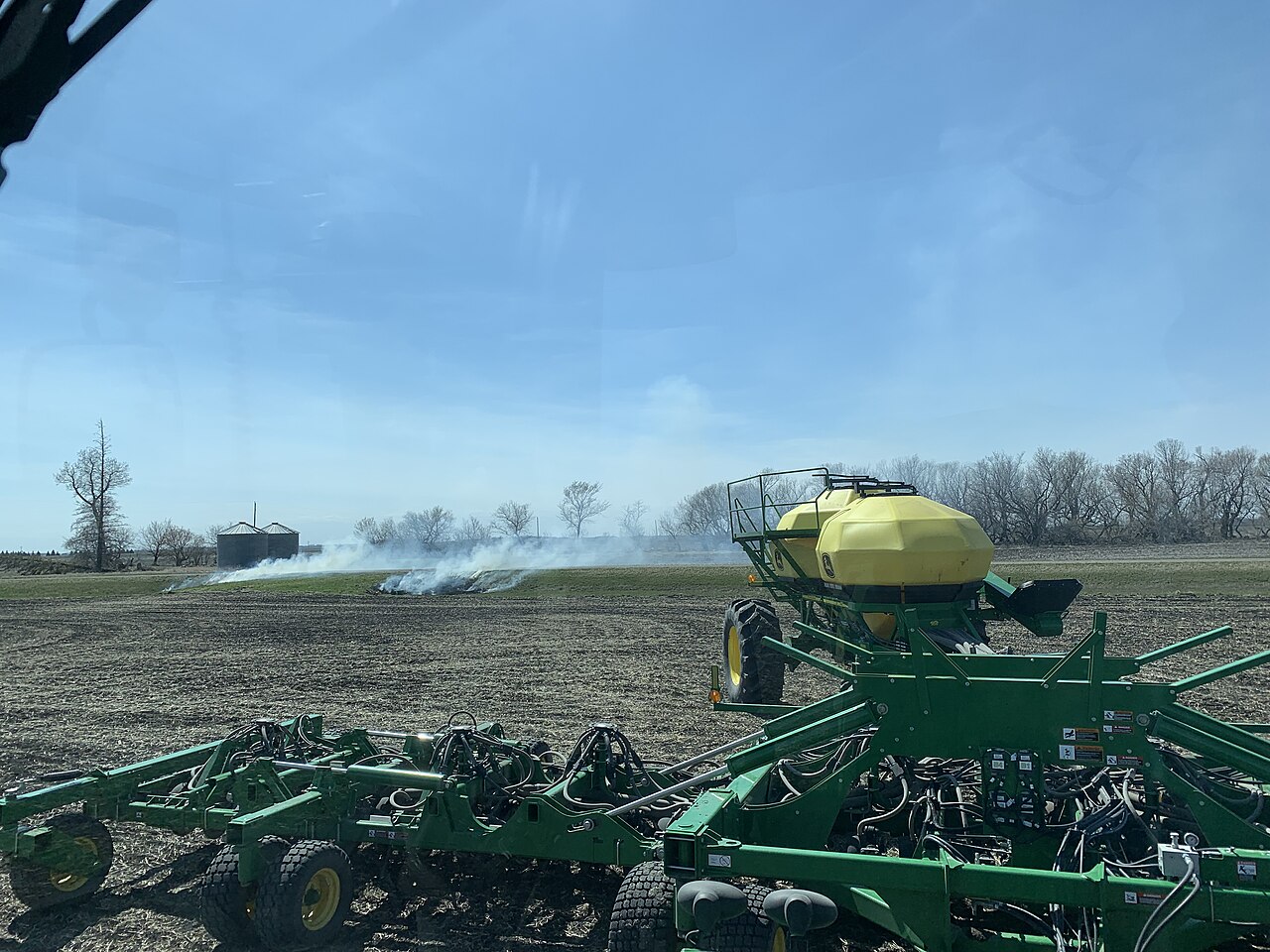

The draft ordinance that would spell out how many chickens an Owosso Township property owner can keep applies only to land zoned A-1 and A-2 — the township's agricultural districts — and not to the residentially zoned parcels where code enforcement has been telling people to get rid of their birds. That is what Draft #2 of the "Raising and Keeping of Farm Animals" text amendment says in the planning commission packet the township has now posted for its Feb. 25, 2026 meeting.
The Current reported on Sept. 27 that an anonymous complaint had put code enforcement onto Bock Street flocks, and that the planning commission asked its planner on Sept. 23 to draft conditional use permit language that could let some chickens stay in residential zones. The February packet shows that request was a new step, eight months into a different project: the farm-animals amendment in this packet is written for agricultural districts and, by its own terms, is the "RTF Exempt" companion to the Michigan Right to Farm Act — it says the section "shall not apply to farms or farm operations protected under the Michigan Right to Farm Act, PA 93 of 1981, as amended."
The numbers in the draft are the part residents will want. On A-1 or A-2 parcels smaller than two acres, a lot under a half-acre could keep six poultry, with two more allowed for each additional half-acre. Coops would have to sit at least 25 feet from a dwelling on an adjacent parcel and runs at least 10 feet from a side or rear property line. Roosters would be prohibited on parcels of two acres or less. On parcels of two to 20 acres, up to 12 poultry are allowed on two acres and 10 more for each additional two acres, coops move out to 50 feet from a lot line, and roosters are permitted only at five acres and up. A zoning permit would be required for any new livestock or small animals, and any intent to sell would have to be noted on the permit. Manure would be capped at six cubic yards and composted or hauled off at least every 30 days.
The draft also carries a grandfather clause: "Animals lawfully kept prior to the adoption of this section may continue subject to nonconforming use provisions, provided no expansion occurs." The packet does not address whether animals kept in a district where the ordinance already barred them would qualify, and the desk has an open question with the township on whether any permit path would reach existing flocks.
The paper trail in the packet starts Jan. 28, when the amendment came up as new business. Planner Ben Keller told the commission he and administrator Dave Chrenka "believe this language is necessary for Owosso Township" and that similar language is in the Caledonia Township and Shiawassee County zoning ordinances. Township attorney Lynn Bowne advised striking language "dealing with killing and dressing." Amy Bontempo of ROWE asked that the rooster restrictions be clarified. The minutes close the item: "Not ready for a Public Hearing, continue conversation for February 2026." The Feb. 25 agenda lists it again as old business, for discussion. Nothing in these documents sets a public hearing or sends the amendment to the township board.
The same packet carries Draft #1 of the battery energy storage ordinance, and it is restrictive. Both small off-site systems, under 50 megawatts, and large off-site systems of 50 megawatts or more would be allowed only as a special land use in the M-2 General Manufacturing district. Setbacks would be 300 feet from a non-participating residential property line, 100 feet from a non-participating non-residential line and 100 feet from a road right-of-way. Structures could not exceed 20 feet and stacking of components would be prohibited. Sound is capped at 50 average hourly decibels at a neighboring non-participating property line. Sites would have to supply on-site water for fire suppression, accessible from outside the perimeter fence, and file both a fire response plan and an emergency response plan. A decommissioning plan would need a surety bond equal to 125% of the estimated removal and restoration cost, reviewed annually by the commission, and a system out of service for six continuous months would be treated as abandoned. Like the chicken language, BESS appears on the Feb. 25 agenda as a discussion item under old business, with no hearing date set. Keller also reported that the township board adopted a 12-month data center moratorium at its January 2026 meeting.
Two other decisions are in the January minutes. On accessory dwelling units — a second home on a lot — the commission dropped the idea after hearing from the Shiawassee County Health Department that wells can be shared only under common ownership, not across separate parcels, and that a second home requires its own septic system; Bontempo added that more bedrooms mean a larger septic field. Keller was directed to write a memo to the township board saying the commission "does not see Accessory Dwelling Units as a good fit." The commission also voted 4-0 — Chair Danny Miller, Dianna Wilson, Jonathan Archer and Rob Collard all yes, Terry Shuster absent — to send its 2025 annual report to the board of trustees.
What happens next: the planning commission's 2026 calendar, set Jan. 28, puts meetings on the fourth Wednesday of each month at 6 p.m., with Oct. 28 and Dec. 9 listed as the remaining dates on the schedule. Neither the farm-animals amendment nor the battery storage ordinance has a public hearing date or a township board date in the documents the township has posted, and the conditional use permit language for residential-zone chickens ordered on Sept. 23 has not been produced.
The Morning Current. Free, daily, by 6 AM.
Every council vote, police report, and school decision in Shiawassee County — before your first coffee.